A hidden world beneath the mountains
Above ground, Cao Bang is a land of limestone peaks, green valleys and winding roads. Beneath that landscape, Nguom Ngao Cave reveals a different kind of wonder: immense chambers shaped by water and stone. As daylight fades behind the entrance, mineral curtains and rugged columns emerge from the shadows. The experience feels like entering a cathedral built by nature rather than human hands.
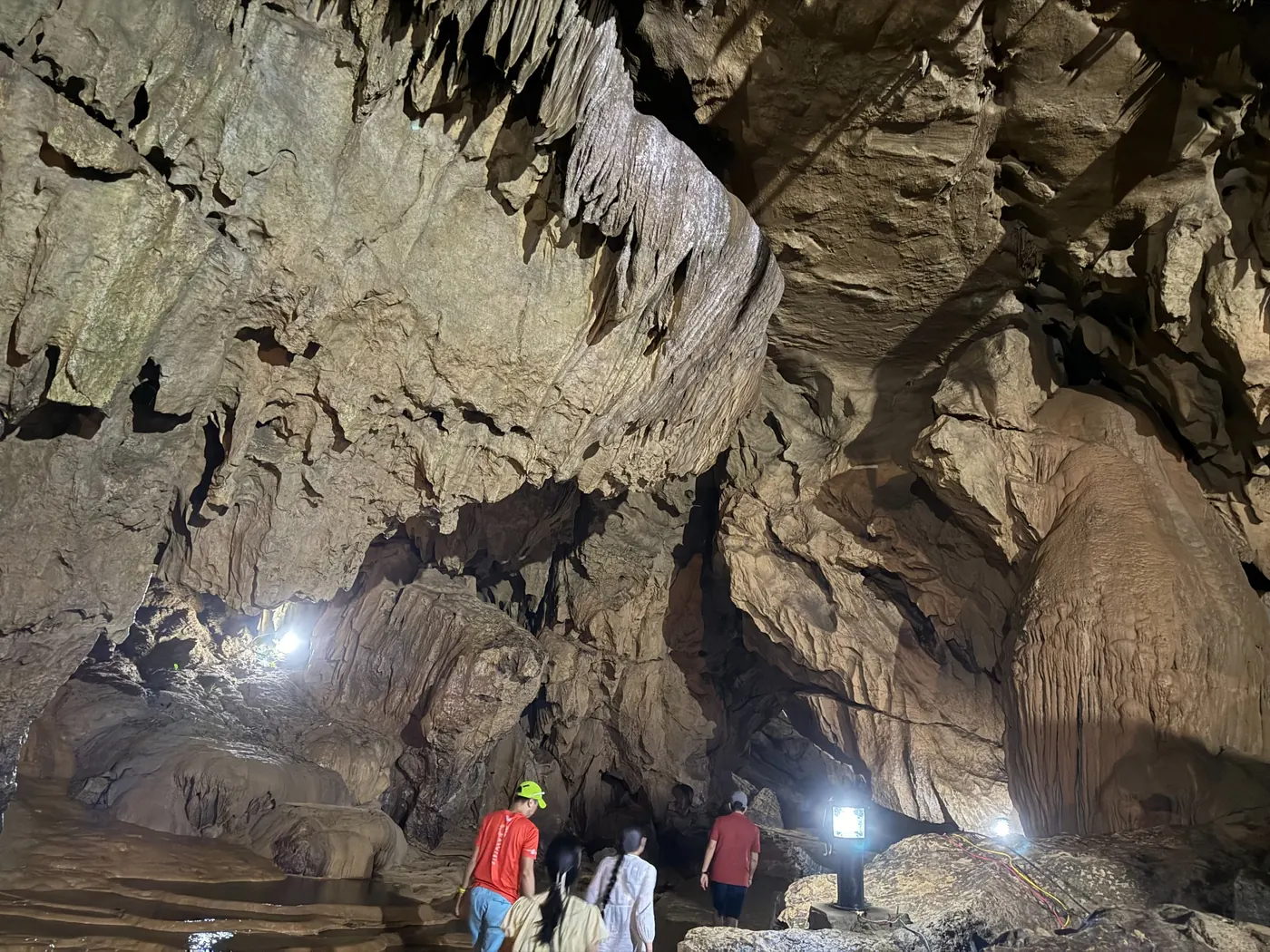
Ancient limestone, younger cave passages
The rock around Nguom Ngao belongs to limestone formations associated with a geological history of roughly 400 million years. That figure describes the surrounding rock, not the precise age of the present chambers or stalactites. Over later geological periods, water dissolved pathways through the rock, while mineral-rich droplets slowly deposited the formations visible today. Understanding this distinction makes the cave's story more fascinating, not less.
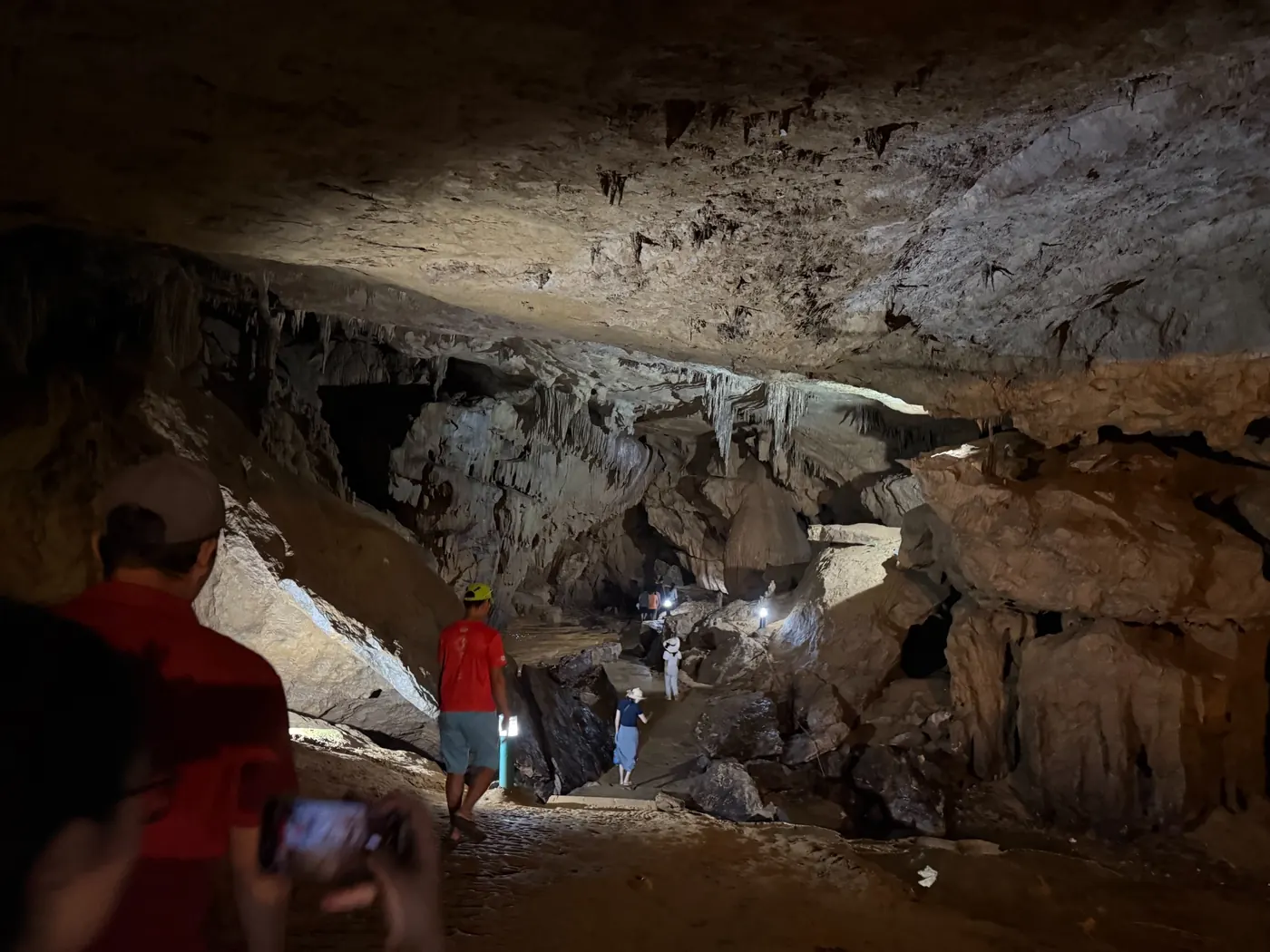
The great chambers of Nguom Ngao
At certain points, the chamber ceilings rise dramatically above the illuminated path. Stalactites hang in delicate folds while towering columns seem to hold the mountain in place. Some resemble waterfalls frozen in stone; others suggest plants, animals or enormous sculptures. Visitors often pause to compare shapes and search for details. The best photographs show a person against the scale of the limestone, but nobody should climb on natural formations to obtain a picture.
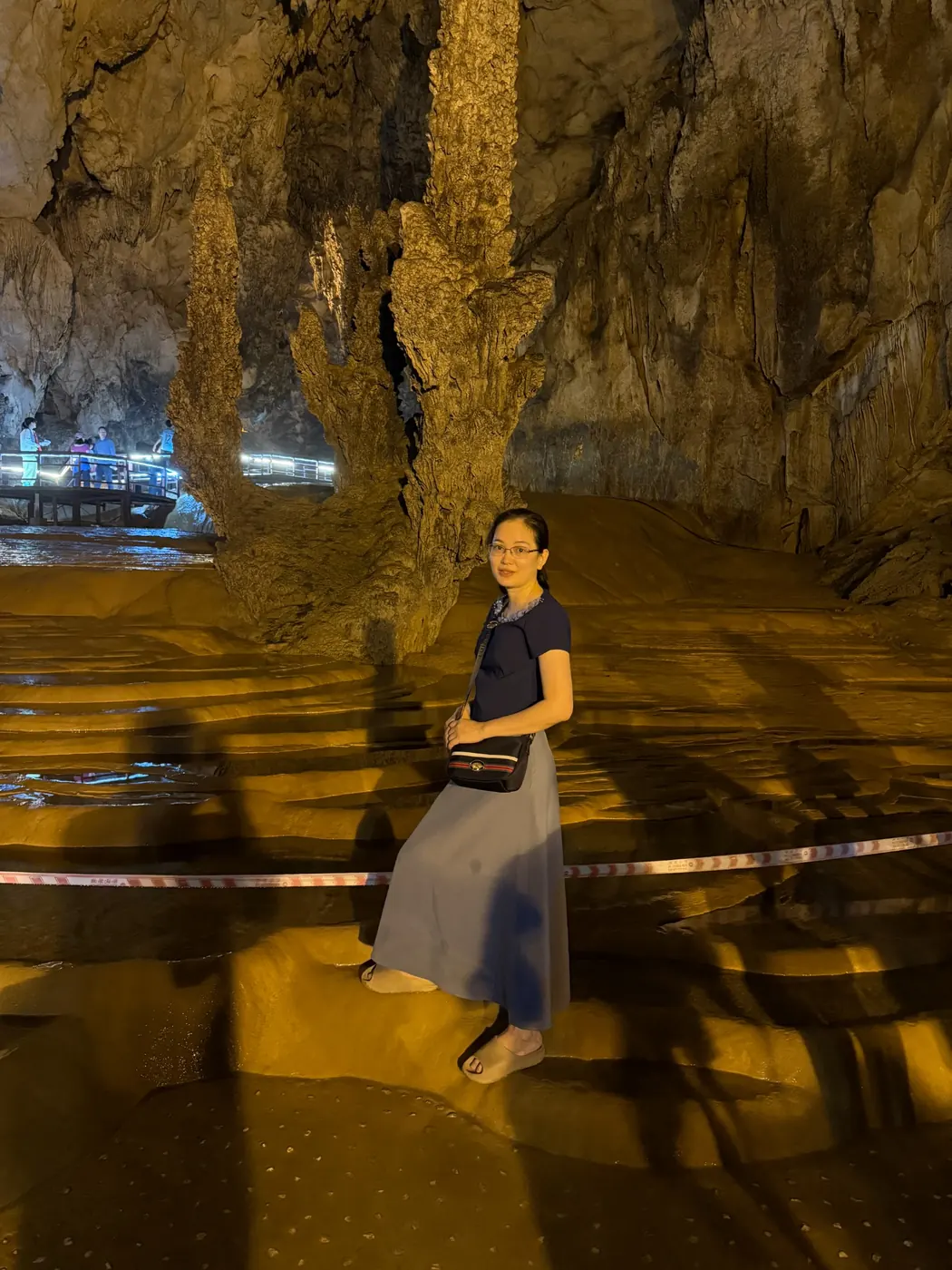
A cultural name: Tiger Cave
Nguom Ngao is commonly translated from the Tày language as Tiger Cave. Local explanations vary. Some accounts recall tigers in the mountains; others connect the name to underground water echoing like a roar. These stories are cultural interpretations rather than verified explanations for individual geological features. They add another layer of meaning to an already extraordinary place.
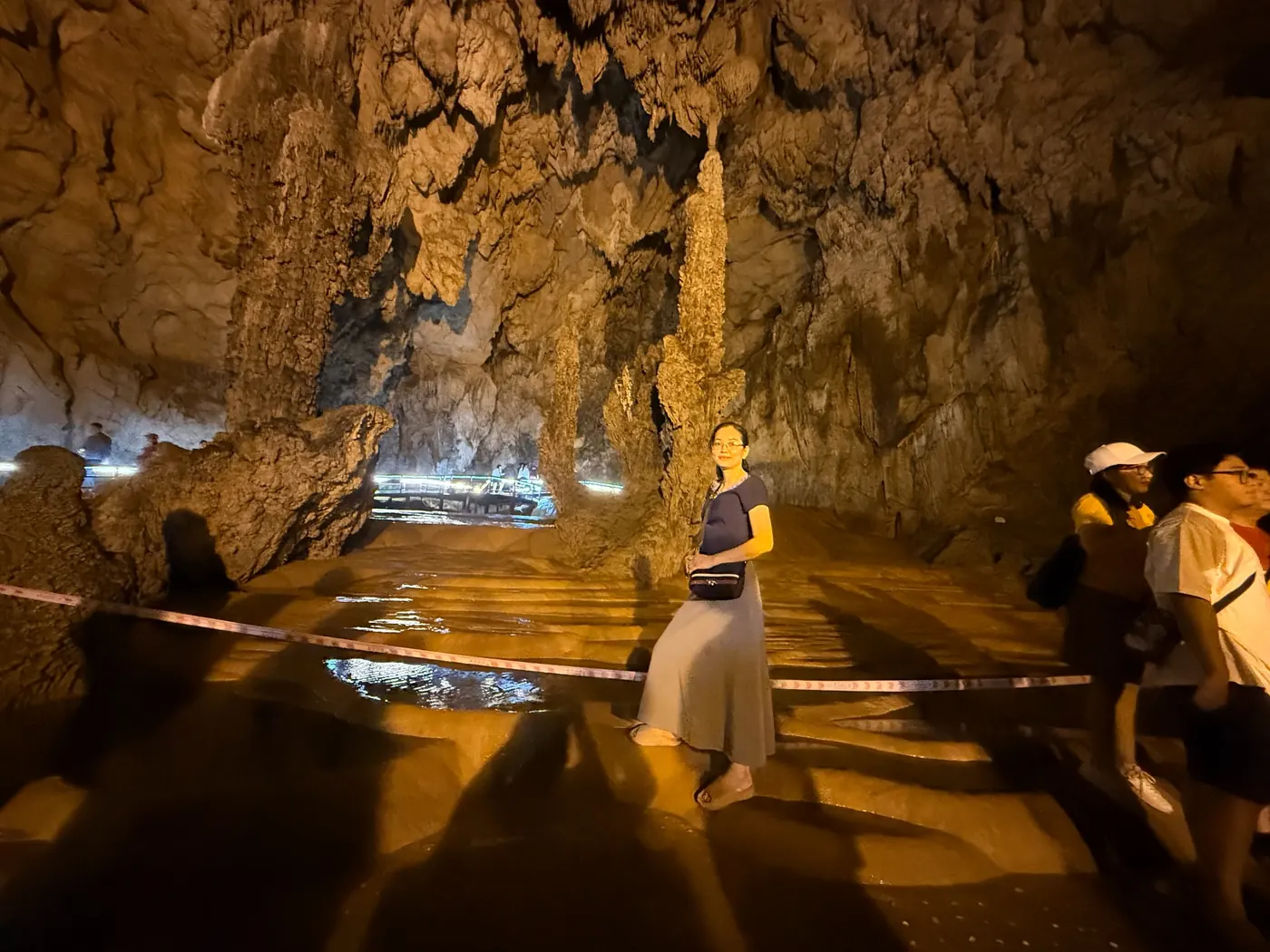
Walking respectfully through the underground landscape
The usual visitor route uses lighting and constructed pathways, yet the cave remains a natural environment. Stone steps can be wet, smooth and slippery, and some areas have uneven footing. Wear shoes with reliable grip, use handrails where provided and respect every barrier. Delicate cave formations take extraordinary periods to grow; touching them can damage their surfaces. Families should supervise children, especially near steps and restricted passages.
Photography: light, shadow and scale
The interplay of light and darkness makes Nguom Ngao especially rewarding for photography. Rather than using a harsh flash, try night mode, stabilise the camera and allow others to pass along the narrow route. Wide images communicate the chamber's scale, while detailed images reveal mineral patterns that can be missed at first glance. The most memorable experience may be a moment spent looking, without a screen, at the roof rising above you.
What to explore when you return to daylight
After the cave, Ban Gioc Waterfall is a natural next stop. Only a few kilometres away, the Quay Son River cascades over limestone terraces with a force that contrasts beautifully with the slow mineral deposits underground. Khuoi Ky Stone Village offers a quieter alternative for travellers interested in Tày architecture and rural life. Together, these nearby attractions reveal several sides of Cao Bang's extraordinary borderland scenery.
Frequently Asked Questions
How old is Nguom Ngao Cave?
The surrounding limestone has a geological history of approximately 400 million years. This is not a precise date for the cave passages or stone formations.
Why is it called Tiger Cave?
The Tày-language name has several traditional explanations, including stories about tigers and echoes from water inside the mountain.
What is nearby?
Ban Gioc Waterfall and Khuoi Ky Stone Village can be visited as part of the same Cao Bang trip.
Continue exploring Vietnam
After this cave visit, consider the remarkable underground landscapes around Phong Nha and the spectacular above-ground limestone scenery of Ha Long Bay.
Ready to experience Vietnam for yourself?
Discover additional itineraries and travel resources from our trusted partner sites.
Explore Vietnam journeys